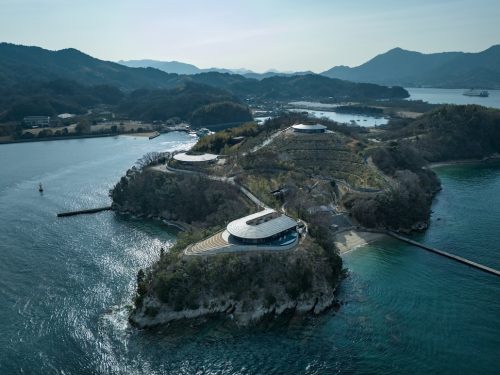
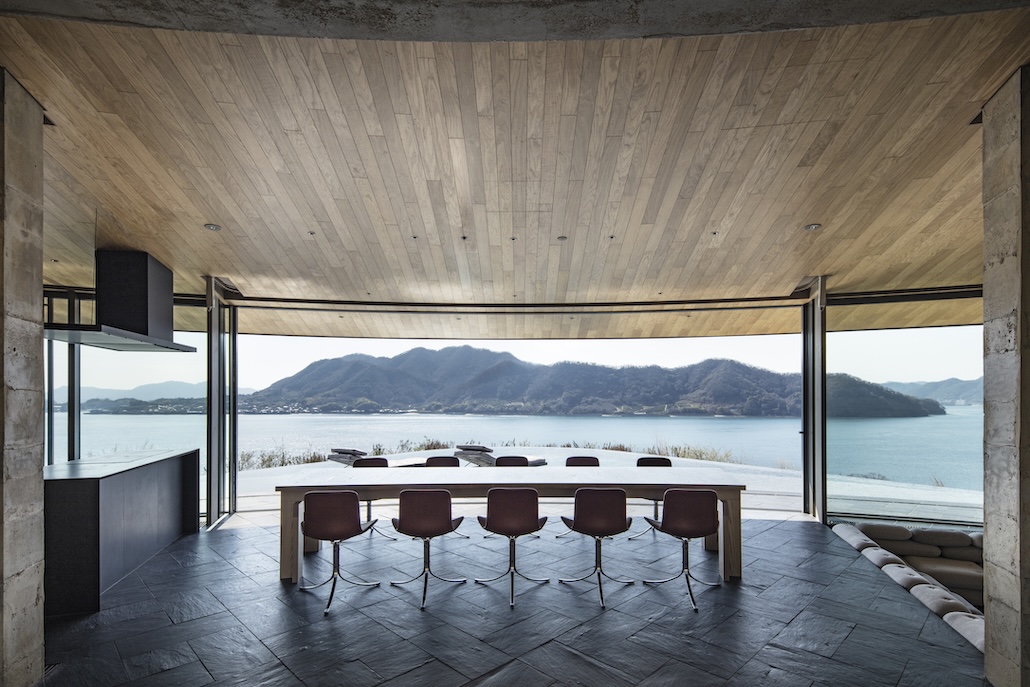
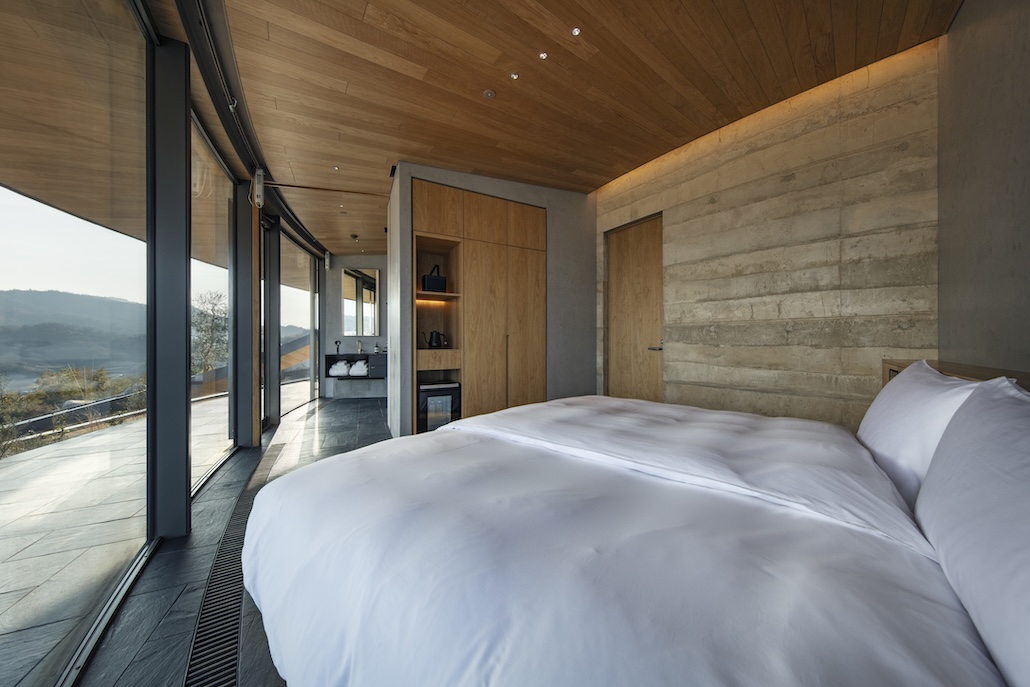
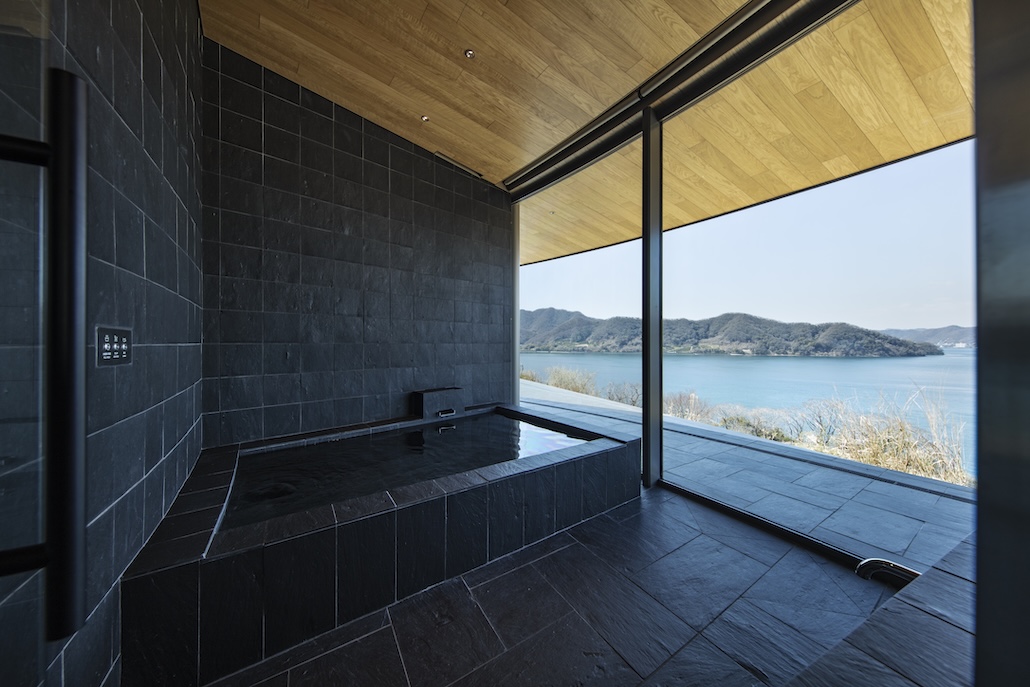
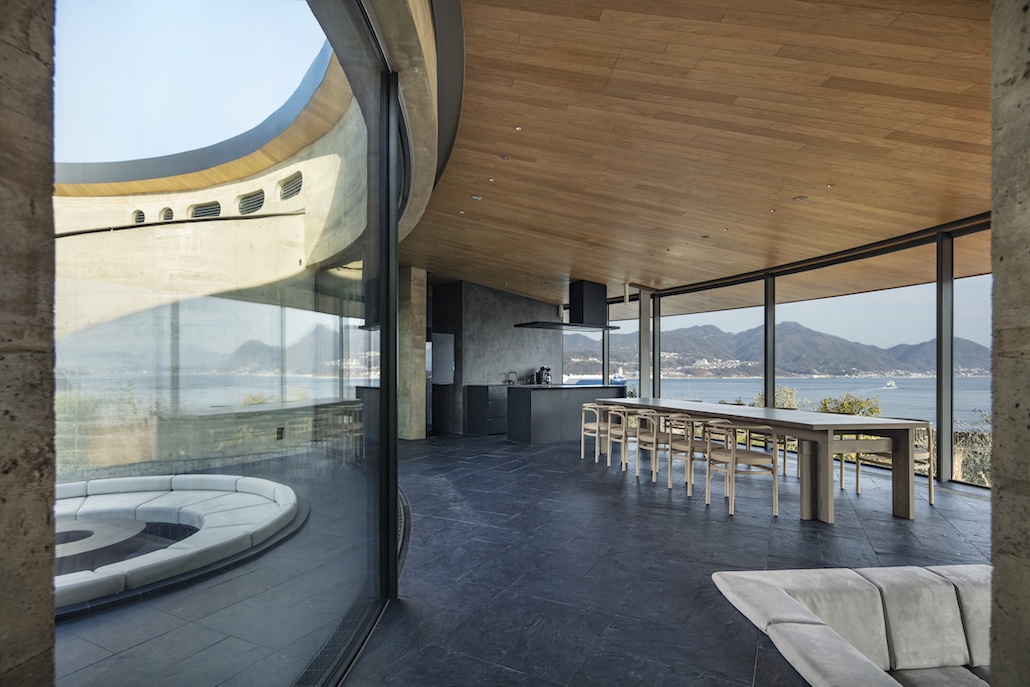
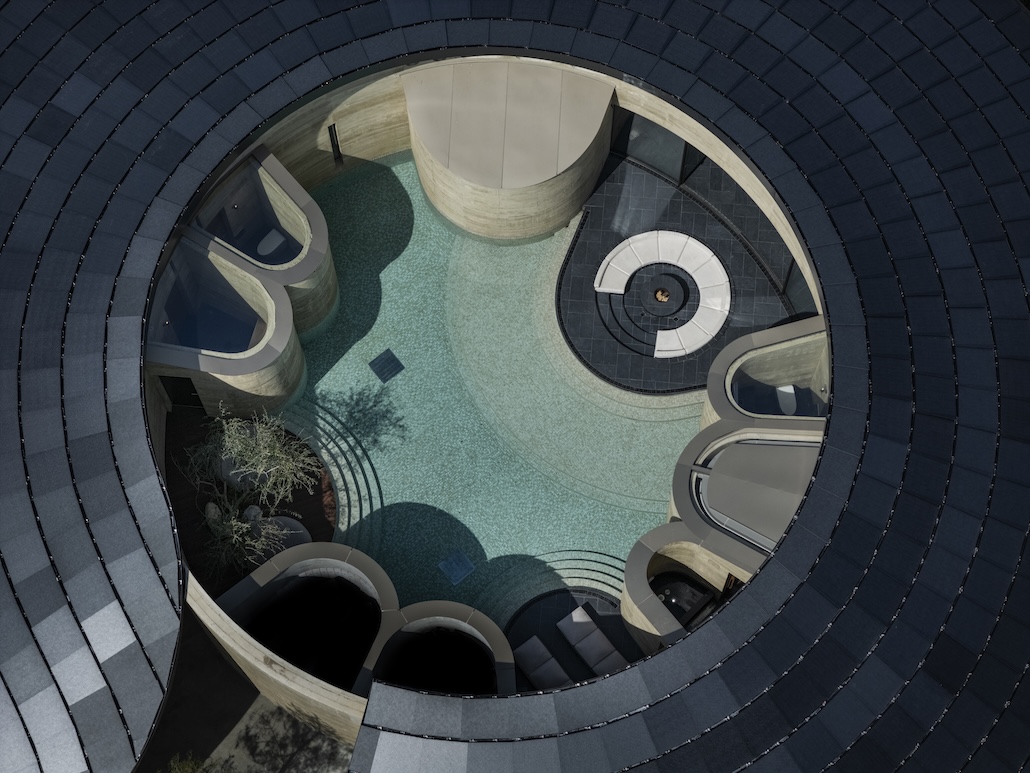
Kopenhagen (abki) – Umgeben vom Seto-Binnenmeer hat das visionäre Hospitality-Unternehmen NOT A HOTEL sein neuestes Resort – NOT A HOTEL Setouchi – auf der abgelegenen Insel Sagishima eröffnet. Die drei markanten Villen wurden aus dem direkt vor Ort gewonnenen Erdreich mithilfe der traditionellen Stampflehmtechnik errichtet und in das bergige Gelände der Insel eingeschnitten.
Das Resort umfasst drei Villen, ein Strandrestaurant und einen Privatstrand auf einem 30.000 m² großen Grundstück am südwestlichen Kap Sagishimas. Der Entwurf stammt von BIG, die Bauzeit betrug weniger als zwei Jahre. Über das Fractional-Ownership-Modell von NOT A HOTEL wurden Anteile angeboten – ein weiterer Baustein im Netzwerk luxuriöser Ferienimmobilien der Marke quer durch Japan.
Landschaft als Leitfaden
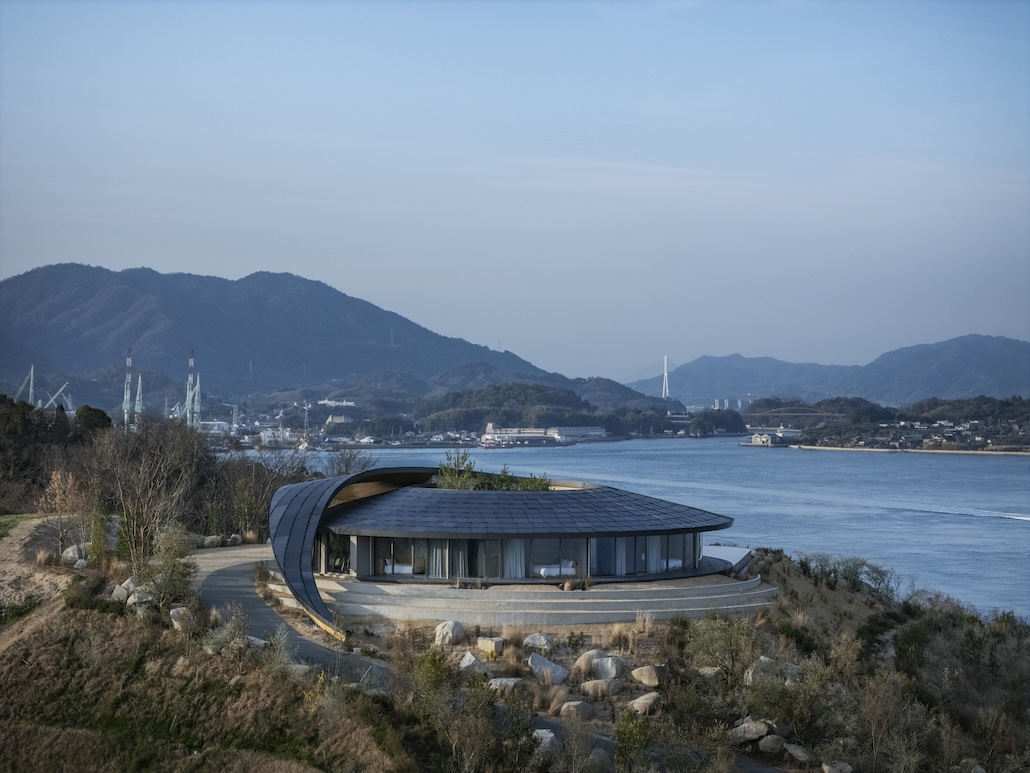
Im Dialog zwischen skandinavischem und japanischem Design entworfen, fügt sich NOT A HOTEL Setouchi in die natürlichen Konturen der Insellandschaft ein. Im Mittelpunkt des Masterplans stand die Wiederherstellung des welligen Geländes: Gräser wurden vor Baubeginn geerntet, Olivenbäume, Zitronenbäume und einheimische Vegetation neu gepflanzt. Die vier Villen – je nach Lage und Aussicht „180″, „270″ und „360″ benannt – sind in die verschiedenen Hanglagen eingebettet und entfalten sich wie ein Band, das sich den Hügel hinaufwindet.
„We are beyond honoured to have partnered with BIG in realising the company’s first buildings in Japan. This is a landmark moment for NOT A HOTEL’s mission to make Japan even more valuable, and we are sure that BIG’s three SETOUCHI villas will provide their owners with unprecedented experiences for years to come.“ — Shinji Hamauzu, Gründer, Co-CEO, Chief Visionary, NOT A HOTEL
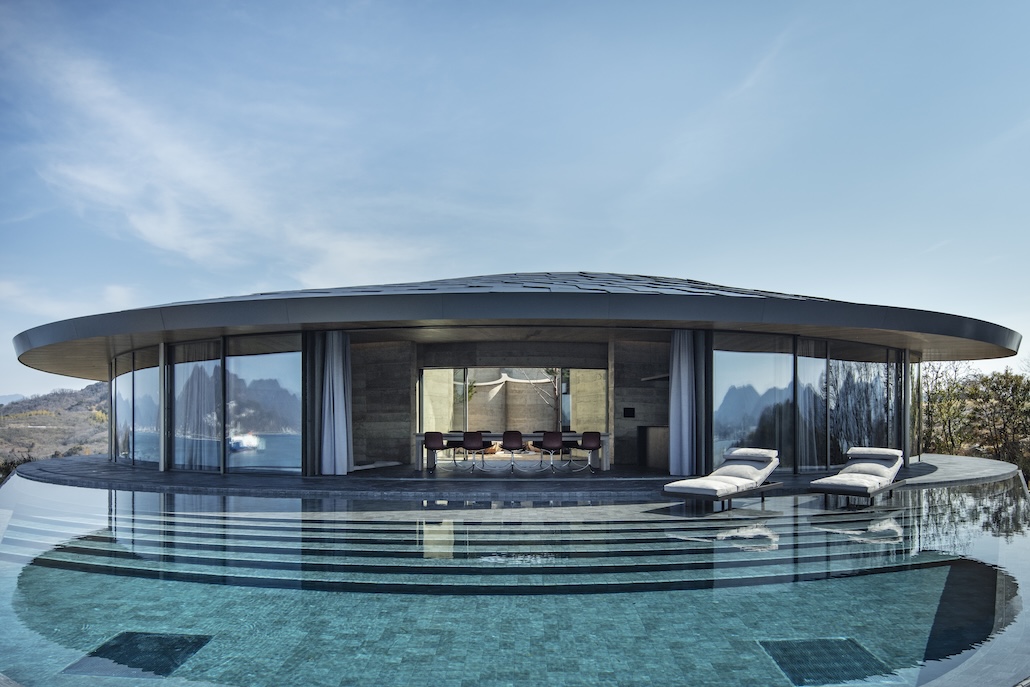
Als Reminiszenz an japanisches Vernakulardesign integrieren die Villen lokale Materialien und greifen traditionelle architektonische Elemente auf: Glasfassaden, die die Grenze zwischen innen und außen auflösen, nehmen die Shoji-Schiebetüren als Vorbild, während das Muster der schwarzen Schieferböden an die Anordnung von Tatami-Matten erinnert. Die tragenden Lehmwände aus vor Ort gewonnenem Erdreich zeigen in der Stampflehmtechnik Farben und Texturen wie geologische Schichten.
„NOT A HOTEL Setouchi are our first completed buildings in Japan, a culture that has had a profound impact on myself and my understanding of architecture; a place where fearless Futurism and deep traditional roots coexist in contrasting harmony. It has been an absolute architectural adventure to work with NOT A HOTEL to make this vision come to life. The archipelago around Sagishima is like a Japanese landscape painting. Steep rolling hills covered in lush green vegetation erupt from the tranquillity of the Seto Inland Sea. The four pavilions are conceived as extensions of the dramatic topography. Hilltops and peninsulas, outcroppings and canyons are outlined by rammed earth walls and solar roofs to provide pavilions with 360-, 270-, 180-, and 90-degree views of the surrounding scenery. On one hand, each home is like an inhabited view, open and extroverted. On the other, their spinal walls outline a private and protected space – open only to the sky. Macrocosmos meets microcosmos, traditional meets modern; Scandinavian and Japanese, the villas are architectural oxymorons embodying seemingly contradictory elements into a holistic hospitable whole.“ — Bjarke Ingels, Gründer und Creative Director, BIG
Jede Villa spiegelt ihre einzigartige Position auf dem Grundstück wider:
„360″ – am höchsten Punkt gelegen, ringförmig, mit freiem Rundumblick über Land und Meer sowie einem privaten Innenhof
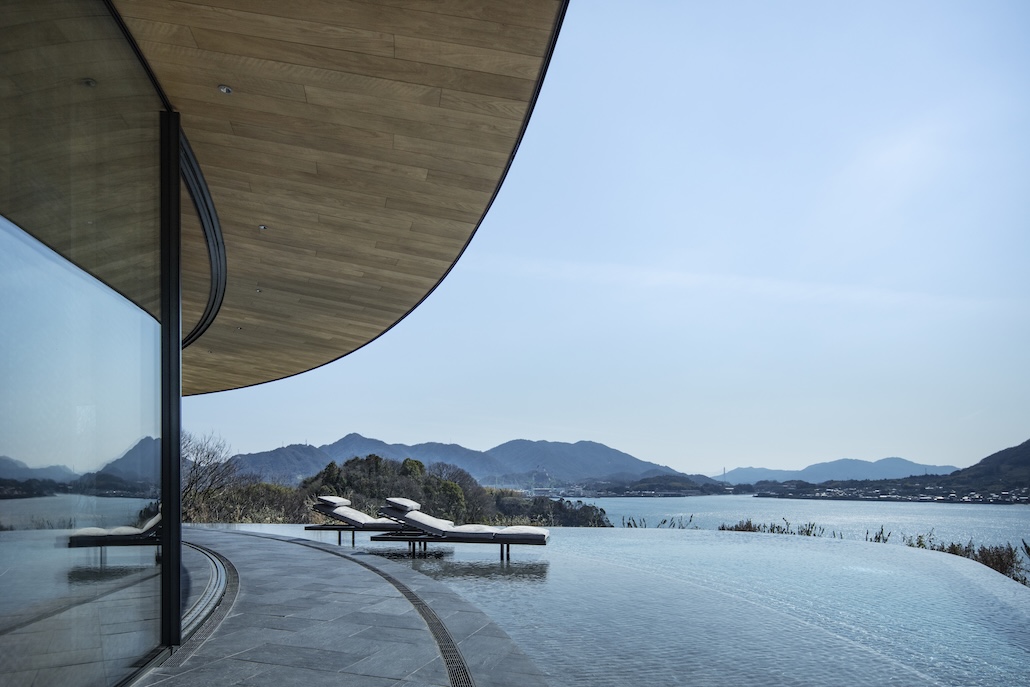
„270″ – mit weitem Panorama über den Archipel, Sauna, Außenbereichen wie schwebenden Inseln um einen Pool sowie einem Feuerbecken
„180″ – an der Spitze der Halbinsel, seiner Küstenlinie nachempfunden, mit geschwungener Form, sanft abfallendem Innenhof, moosigen Wegen und jahreszeitlich wechselndem Blattwerk
„When we first visited Sagishima, we found ourselves tracing the terraced contours of the site, always drawn toward the horizon. That walk wrote the architecture – each step along the hillside became the curving forms of the villas, their long facades opening to capture the panoramic sea.“ — Leon Rost, Partner, BIG
Jede Villa fließt als ein einziger großer, zusammenhängender Raum, während Bäder und Stauraum in separaten Pavillons untergebracht sind. Oberlichter krönen jeden Pavillon und garantieren den Blick in den Himmel – eine Balance aus Offenheit und Rückzug.
Die mit reflexionsarmen Solarziegeln gedeckten Dächer sind eine technologische und moderne Interpretation des traditionellen japanischen Dachs. Bewegliche Fassadenelemente und Überstände sorgen im Frühjahr und Sommer für passive Kühlung, Regenwasser wird vor Ort gesammelt und zur Bewässerung genutzt.
„What began as BIG’s ambition to create something that could serve as a gift to the majestic landscape of Setouchi was realized with NOT A HOTEL’s mission to elevate the value of Japan as well as the enduring craftsmanship that still exists across the country, the skill of its builders and artisans, the support of the local community, and the dedication of everyone involved – turning what first felt like a dreamlike fiction into a reality. The project stands as a remarkable convergence of Danish design and philosophy, traditional Japanese architecture, and the technical sophistication and construction precision of contemporary Japan. NOT A HOTEL Setouchi could have only been made in this place, at this moment, and by this team, and that is what makes it truly special.“ — Ryohei Koike, Associate, BIG
NOT A HOTEL Setouchi reiht sich in BIGs wachsendes Portfolio an Hospitality-Projekten ein – darunter das Hôtel des Horlogers von Audemars Piguet in den Schweizer Bergen, The Biosphere im Treehotel in Schwedisch-Lappland sowie das kommende El Cosmico in Texas.
Quelle: BIG Bjarke Ingels Group · KI-gestützte Textaufbereitung · Redaktion: Architekturblatt